When a sequel lands, especially one following a surprise hit, it steps onto a stage fraught with expectation. Under Siege 2: Dark Territory (1995) was no exception. It aimed to recapture the lightning-in-a-bottle success of its predecessor, bringing Steven Seagal's ex-Navy SEAL Casey Ryback back for another round of high-octane heroics. But how did this train-bound thriller fare with critics and audiences, what numbers did it pull at the box office, and what enduring mark did it leave on the action genre and its star's career? Let’s take a deep dive into the Critical Reception, Box Office, and Legacy of Under Siege 2.
This isn't just a nostalgic look back; it's an exploration of how a film's journey extends far beyond its release date, shaping perceptions, influencing future projects, and sometimes, revealing uncomfortable truths about its production.
At a Glance: Under Siege 2's Journey
- Premise: Ex-Navy SEAL Casey Ryback (Steven Seagal) battles terrorists on a hijacked train.
- Critical Reception: Largely "mixed or average," leaning negative from critics (34% on Rotten Tomatoes, 52/100 on Metacritic).
- Audience Response: Far more positive, earning an "A−" on CinemaScore.
- Box Office: Opened strong at #2, grossing over $12.6 million in its first weekend.
- Key Criticisms: Action overshadowing acting, Seagal's performance.
- Key Praises: Strong villain performances by Eric Bogosian and Everett McGill.
- Legacy Impact: Marked by on-set controversies regarding Steven Seagal, and the ongoing attempts to revive the Under Siege franchise.
The Tracks Laid: Understanding Under Siege 2's Context
Before we dissect its post-release journey, it's crucial to understand what Under Siege 2: Dark Territory was and what it was trying to be. Directed by Geoff Murphy, this 1995 American action thriller brought back Steven Seagal as the culinary-skilled, martial-arts-proficient hero, Casey Ryback. The film’s intriguing title, "Dark Territory," is a real railroading term for a stretch of track without modern signals or communication, a fitting metaphor for the high-stakes, off-the-grid conflict that unfolds.
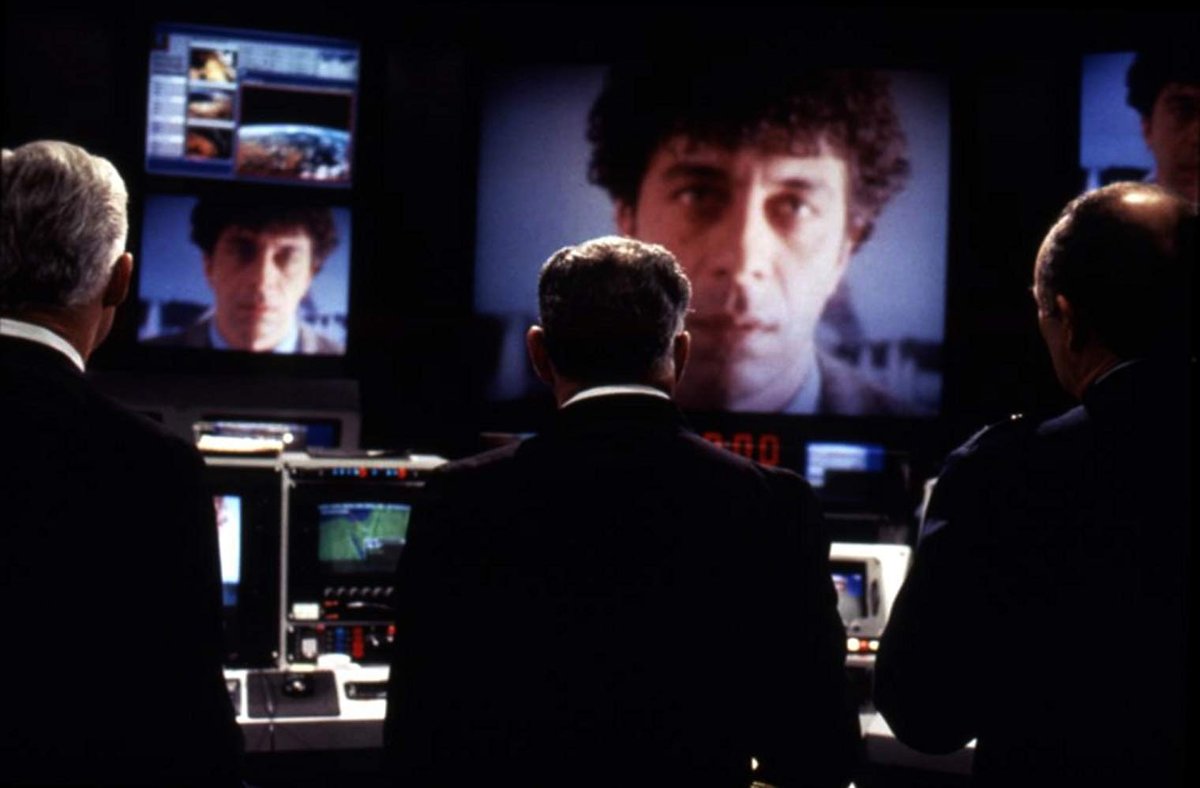
The plot sees Ryback, now a restaurateur, traveling with his recently orphaned niece, Sarah, aboard the "Grand Continental" train. Their journey from Denver to Los Angeles is violently interrupted when the train is hijacked by former U.S. government computer genius Travis Dane (Eric Bogosian) and his mercenary leader, Marcus Penn (Everett McGill). Dane, faking his suicide after being fired, intends to use the train as a mobile command center to control "Grazer One," a devastating military satellite weapon. His goal: to destroy the Eastern seaboard for a billion-dollar payment from Middle Eastern terrorists, demonstrating the satellite's power by obliterating a Chinese biological weapons facility and an airliner along the way.
Ryback, naturally, becomes the lone force standing against this global threat, navigating the train's complex labyrinth, eliminating terrorists, and eventually engaging in a climactic confrontation involving helicopters, train collisions, and satellite disarmament.
Behind the Scenes: A "Dreary Process"
The genesis of Under Siege 2 wasn't entirely smooth. Initially, the script, then titled "Dark Territory" or "End of the Line," was conceived by Matt Reeves and a friend as a standalone "Die Hard"-esque story. It was later adapted to fit the Under Siege universe. Steven Seagal himself reportedly rewrote many of his scenes, a common occurrence in his films that often shaped his character's dialogue and action sequences.
However, the production wasn't without its tensions. Director Geoff Murphy candidly described the experience as a "dreary process" due to contention on set. While specifics aren't widely detailed in general production notes, this kind of observation from a director often hints at creative differences or challenging working environments, which can subtly, or not so subtly, impact the final product.
Decoding the Critical Response: A Mixed Bag on the Tracks
When Under Siege 2: Dark Territory pulled into the critical station, it received a reception that could best be described as lukewarm. It wasn't universally panned, but it certainly didn't garner the enthusiastic praise that might elevate a film to classic status.
Let’s break down the numbers and the sentiment:
- Rotten Tomatoes: The film holds a 34% approval rating based on 32 critic reviews, with an average score of 4.73/10. The consensus summary is quite blunt: it's called "utterly forgettable and completely unnecessary." This suggests that many critics felt it failed to justify its existence as a sequel, offering little new or compelling.
- Metacritic: It scored 52 out of 100 from 21 critics. Metacritic categorizes this as "mixed or average reviews." This score aligns with Rotten Tomatoes, indicating a general feeling among professional critics that the film was passable, but not particularly noteworthy or innovative.
The Critic's Eye: Action Over Actors, Seagal Underwhelms
What were the specific points of contention for critics?
- Action Upstaged Actors: A recurring observation was that the spectacle of the action sequences often overshadowed the performances of the actors. While this might sound like a compliment to the stunt work and visual effects, it also implies that character development, emotional depth, or compelling dialogue took a backseat. For many film critics, a balanced narrative with strong performances is paramount, even in an action film.
- Seagal's Performance: Steven Seagal, as the returning hero Casey Ryback, drew specific criticism. By 1995, Seagal's distinctive, often stoic and unyielding, acting style was well-established. However, critics seemed to find it particularly uninspired or monotonous in Under Siege 2. This might have contributed to the feeling of the film being "forgettable"—if the lead performance doesn't captivate, even impressive action can fall flat.
A Silver Lining: Praising the Villains
Despite the overall muted reception, there was a consistent point of praise: the villains. Eric Bogosian as the eccentric computer genius Travis Dane and Everett McGill as the ruthless mercenary Marcus Penn received positive nods.
- Eric Bogosian's Travis Dane: Bogosian brought a manic energy and quirky intelligence to Dane, making him a memorable antagonist. His portrayal provided a much-needed injection of personality and menace that critics appreciated, often contrasting it with Seagal's more subdued presence.
- Everett McGill's Marcus Penn: McGill's portrayal of Penn offered a more traditional, formidable physical threat, grounding Dane's cerebral villainy with brute force. Together, they formed a compelling duo that critics acknowledged as a highlight of the film.
The Audience Verdict: A Different Tune
Interestingly, while critics were largely unimpressed, audiences had a decidedly more favorable view. Polled by CinemaScore, audiences gave Under Siege 2: Dark Territory an impressive "A−".
This stark contrast between critical and audience reception is a phenomenon often seen in genre films, particularly action movies.
- What explains this gap? Critics often look for artistic merit, innovation, intricate plotting, and nuanced performances. Audiences, on the other hand, especially those drawn to an Under Siege sequel, are often seeking pure entertainment: explosive action, a clear hero and villain, and thrilling escapism.
- Fulfilling Expectations: For many moviegoers, Under Siege 2 delivered exactly what they wanted from a Steven Seagal action vehicle: inventive kills, martial arts prowess, and a straightforward good-versus-evil narrative set against an engaging backdrop. The film provided the "popcorn entertainment" that satisfied its target demographic, even if it didn't win over discerning film reviewers.
Box Office Performance: Riding the Rails to Profit?
In the fast-paced world of Hollywood, box office numbers are the ultimate arbiter of a film's immediate commercial success. While Under Siege 2: Dark Territory may have received mixed critical reviews, its initial performance at the box office told a different story regarding audience interest.
The film opened at #2 in its debut weekend, pulling in a respectable $12,624,402 from 2,150 theaters. This was a solid start for an action sequel in 1995, demonstrating that the appeal of Steven Seagal and the Under Siege brand was still strong enough to draw a significant audience.
What the Numbers Tell Us (and What They Don't)
- Initial Draw: Opening at #2 suggests healthy pre-release buzz and anticipation, fueled by the success of the original Under Siege (1992). Audiences were ready for more Casey Ryback.
- Competition: To properly contextualize its #2 opening, one would typically compare it to the #1 film that weekend and other major releases. However, without that data, we can still infer that it faced significant competition and managed to hold its own.
- Limited Data: The provided ground truth specifically highlights the opening weekend gross but does not offer the film's total domestic or worldwide box office figures. This makes a complete financial analysis challenging. However, an opening of over $12 million often indicates that a film, particularly one in the action genre, has the potential to at least break even or turn a modest profit, depending on its budget.
- Audience Loyalty: The strong opening weekend, coupled with the "A−" CinemaScore, reinforces the idea that the film largely satisfied its target audience. This word-of-mouth (or lack thereof) would dictate its performance in subsequent weeks. A positive CinemaScore often translates to better week-to-week holdovers, even if critical reviews are poor.
While we can't definitively declare Under Siege 2 a massive financial blockbuster based solely on its opening weekend, it certainly wasn't a flop out of the gate. It tapped into a reliable audience eager for Steven Seagal's brand of action, proving that star power and a successful formula could still drive initial theatrical success, regardless of critical consensus. Learn more about Under Siege 2 to appreciate the specific elements that contributed to this initial draw.
The Ripple Effect: Under Siege 2's Enduring Legacy
Beyond its immediate box office performance and critical reception, Under Siege 2: Dark Territory has carved out a distinct, if sometimes complicated, legacy. This isn't just about how the film itself is remembered, but how it factored into Steven Seagal's career trajectory, influenced perceptions of the action genre, and even sparked conversations around Hollywood's working conditions.
Steven Seagal's Trajectory: A Fading Peak?
For Steven Seagal, Under Siege 2 represented one of his last major theatrical releases before his career largely transitioned to direct-to-video films. While the initial Under Siege was a genuine breakout success, the sequel's mixed critical reception and perhaps less spectacular overall box office performance (though precise totals are unavailable) might have signaled a shift.
- Repetition vs. Evolution: Critics' complaints about Seagal's performance suggested a growing weariness with his predictable persona. While his fanbase appreciated his consistent style, the broader critical establishment looked for more. This film, therefore, can be seen as a marker of a point where the formula, for some, began to feel stale.
- The Action Icon's Place: The mid-90s was a competitive era for action stars. While Seagal carved his niche with his distinct Aikido-infused style, films like Under Siege 2 arguably didn't push the boundaries of action cinema in the way some contemporaries were, which might have contributed to its eventual "forgettable" label by critics.
Controversies Behind the Scenes: A Cloud Over Legacy
Perhaps the most troubling and enduring aspect of Under Siege 2's legacy involves serious accusations of inappropriate behavior against Steven Seagal during its production. These incidents have significantly impacted how the film, and Seagal himself, are viewed in retrospect, especially in light of increased awareness regarding workplace conduct in Hollywood.
- Jenny McCarthy's Audition: Actress Jenny McCarthy publicly claimed that during her audition for Under Siege 2, Seagal asked her to remove her clothes. Such an allegation, if true, highlights serious concerns about power dynamics and appropriate professional conduct in the casting process.
- Katherine Heigl's Account: Katherine Heigl, who was just 16 years old at the time of filming, also recounted receiving suggestive comments from Seagal. Her youth at the time makes these allegations particularly concerning, shedding light on potential abuses of power.
These accusations, years after the film's release, cast a long shadow. They transform a discussion about a film's quality or box office into a necessary conversation about ethical production practices and the responsibilities of those in positions of power. For many, this darker aspect of Under Siege 2's production is now an inseparable part of its legacy.
The Franchise's Unending Quest for Revival
Despite the mixed reception and the controversies, the Under Siege concept has proven remarkably resilient. The idea of a lone hero thwarting terrorists in a confined, high-stakes environment remains appealing, leading to multiple attempts at franchise resurrection:
- Seagal's Announced Third Film (2016): Years after Dark Territory, Steven Seagal himself announced a script for a third Under Siege film, written by Woodie Mister. However, its status remains pending, suggesting the project never fully materialized or ran into development hurdles. This indicates Seagal's own desire to revisit the character, despite his shifting career path.
- HBO Max Reboot (2021): Perhaps the most significant development in the franchise's legacy is the announcement in November 2021 of a complete reboot for HBO Max. Director Timo Tjahjanto (known for his visceral action films) is set to direct, with a script co-written by Umair Aleem and Tjahjanto. This news confirms the enduring appeal of the original premise and suggests a belief that the concept can be successfully updated for a new generation and streaming platform. It signals that even if Under Siege 2 didn't become a cinematic masterpiece, the core idea behind it still holds significant value for producers.
The legacy of Under Siege 2 is a multifaceted one. It’s a film that satisfied its immediate audience but struggled with critics, marked a turning point in its star's career, and is now inextricably linked to serious allegations. Yet, the strength of its core concept continues to intrigue filmmakers, ensuring the Under Siege name persists, even if its future iterations diverge significantly from the "Dark Territory" explored in this 1995 sequel.
Beyond the Tracks: What Under Siege 2 Taught Us
Analyzing Under Siege 2: Dark Territory isn't just an exercise in film criticism; it offers valuable insights into the dynamics of Hollywood, audience expectations, and the complexities of a film's life cycle. This film, like many others, serves as a case study in several key areas.
The Peril and Promise of Sequels
Under Siege 2 is a prime example of the sequel dilemma: how do you replicate the success of an original without merely repeating yourself? While it stuck to a proven formula—Casey Ryback against terrorists in a confined space—critics found it "forgettable" and "unnecessary." This highlights the challenge of pushing a narrative forward while maintaining the essence that made the first film a hit. A sequel needs to justify its existence, offering new thrills, deeper character insights, or innovative storytelling, rather than just more of the same. The audience "A-" suggests it delivered "more of the same" successfully for many, but the critical dismissal points to a missed opportunity for evolution.
The Ever-Present Divide: Critics vs. Audiences
The stark difference between the critical reception (mixed to negative) and audience score (A-) for Under Siege 2 is a classic illustration of the gap that often exists between professional reviewers and the general public, particularly for genre films.
- Different Metrics: Critics often evaluate films based on artistic merit, originality, technical execution, and thematic depth. Audiences, especially for action films, frequently prioritize entertainment value, escapism, and the fulfillment of genre expectations.
- Target Audience Satisfaction: Under Siege 2 clearly satisfied its core audience, who likely came for explosions, martial arts, and Steven Seagal kicking ass. It delivered on that promise, reinforcing the idea that a film doesn't need critical acclaim to be financially successful or loved by its fans.
The Enduring Power of a Simple Premise
Despite all the varied reactions and behind-the-scenes issues, the fundamental premise of Under Siege—a skilled individual fighting overwhelming odds in a restricted environment—remains potent. The ongoing attempts to revive the franchise, from Seagal's announced third film to the HBO Max reboot, underscore this. A strong, easily understood, and inherently thrilling concept can outlive critical reviews, star controversies, and even decades of cinematic trends. It’s a testament to the timeless appeal of the "Die Hard on a..." subgenre.
Navigating Complex Legacies
Finally, Under Siege 2 forces us to confront the uncomfortable reality that a film's legacy is not solely about its artistic or commercial merits. The accusations of misconduct against Steven Seagal during production remind us that the human element, the ethical responsibilities of those in power, and the safety of the working environment are integral to a project's overall story. As culture evolves, so does our lens for viewing past works, often bringing to light aspects previously overlooked or suppressed. This particular film, therefore, carries a weight that extends far beyond its ninety-nine minutes of action.
Under Siege 2: Dark Territory might not have been a critical darling, but its journey—from its ambitious production to its mixed reception, its box office run, and its ongoing legacy—offers a rich tapestry of lessons for anyone interested in the dynamics of filmmaking and its lasting impact on both entertainment and society. It's a reminder that a film's story truly never ends with the final cut.